Shelfology Book Pairing
The Book of Five Rings
Miyamoto Musashi
by Miyamoto Musashi
Limited Time Promotional Offer The Book of Five Rings In "The Book of Five Rings," Miyamoto Musashi takes the reader into a world filled to the brim with devotion, self-respect, discipline, honesty and purity of thought. Written originally for warriors and samurai in a completely different time and culture, Musashi's book provides a remarkable source of inspiration for self-development today. His teachings are concise and to the point. He uses phrases like "you must understand this" and "you must practice diligently" and explains only general, but unquestionable and fundamental, concepts of the Way of the Warrior. While some of his guidelines are are not directly applicable in our time and age, those about striving to achieve improvement on the inside as well as the outside couldn't be more on target. Taken literally this book is about how to become an efficient, albeit enlightened, killer. It's value comes from reading between the lines... lines which speak volumes. About Miyamoto Musashi: Miyamoto Musashi (1584-1645), was a Japanese swordsman and ronin. Musashi, as he was often simply known, became renowned through stories of his excellent swordsmanship in numerous duels, even from a very young age. The founder of a style of swordsmanship, he also wrote The Book of Five Rings, a book on strategy, tactics, and philosophy that is still studied today. Miyamoto Musashi is widely considered a Kensei and one of the greatest warriors of all time.
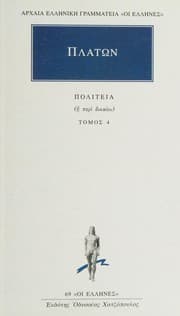
The Republic
Plato
by Plato
Plato's Republic has long defied classification: it is a philosophical masterpiece; it is acute political theory; it is great literature. Although certain inconsistencies have been subsequently discovered, philosophical and otherwise, there can be no doubt that The Republic is a work of genius. It has as its central problem the nature of justice. In a word, what is justice? From this common origin, however, the book divides at a broader level. There is first of all the mundane, represented in the first books by the refutation of proverbial morality and traditional society. But the middle books belong almost exclusively to pure philosophy. In these Plato examines the figure of the philosopher, metaphysics, and epistemology, an extended investigation that culminates in the allegory of the vision, visibility, and the sun as symbol of the good, or justice. It not until the delineation of the famous "Myth of the Cave" in Book VII, however, that the two realms: material and ideal, polity and philosophy, historical State and ideal State, virtue and ethics truly come together. The image of the liberated prisoner forsaking the light, compelled whether by force or obligation?Plato would say duty?to rejoin his companions in the murky darkness of the cave, is perhaps the key to the underlying unity of The Republic. It is in the individual that the two realms meet. Plato's aim, then, was to realize social and political stability on a foundation of moral and spiritual absolutes by which every man may live.
These books are No Strangers
These books sit together on 3 different collections in our database