Shelfology Book Pairing
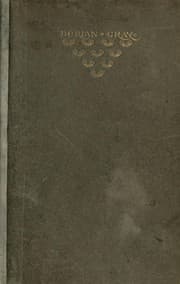
The Picture of Dorian Gray: Oscar Wilde (Classics, Literature) Annotated
by Oscar Wilde
The Picture of Dorian Gray is the story of one beautiful, innocent young man''s seduction, moral corruption, and eventual downfall. We meet our three central characters at the beginning of the book, when painter Basil Hallward and his close friend, Lord Henry Wotton, are discussing the subject of Basil''s newest painting, a gorgeous young thing named Dorian Gray. Basil and Henry discuss just how perfectly perfect Dorian is--he''s totally innocent and completely good, as well as being the most beautiful guy ever to walk the earth. Lord Henry wants to meet this mysterious boy, but Basil doesn''t want him to; for some reason, he''s afraid of what will happen to Dorian if Lord Henry digs his claws into him. However, Lord Henry gets his wish--Dorian shows up that very afternoon, and, over the course of the day, Henry manages to totally change Dorian''s perspective on the world. From that point on, Dorian''s previously innocent point of view is dramatically different--he begins to see life as Lord Henry does, as a succession of pleasures in which questions of good and evil are irrelevant. Basil finishes his portrait of Dorian, and gives it to the young man, who keeps it in his home, where he can admire his own beauty. Lord Henry continues to exert his influence over Dorian, to Basil''s dismay. Dorian grows more and more distant from Basil, his former best friend, and develops his own interests. One of these interests is Sybil Vane, a young, exceptionally beautiful, exceptionally talented--and exceptionally poor--actress. Though she''s stuck performing in a terrible, third-rate theatre, she''s a truly remarkable artist, and her talent and beauty win over Dorian. He falls dramatically in love with her, and she with him. For a moment, it seems like everything will turn out wonderfully. However, this is just the beginning of Dorian''s story. Once he and Sybil are engaged, her talent suddenly disappears--she''s so overcome with her passionate love for Dorian that none of her roles on stage seem important to her anymore. This destroys Dorian''s love for her, and he brutally dumps her. Back home, he notices a something different in his portrait--it looks somehow crueler. In the meanwhile, the distraught Sybil commits suicide, just as Dorian decides to return to her and take back his terrible words. Sybil''s suicide changes everything. At first, Dorian feels horrible... but he rather quickly changes his tune. On Lord Henry''s suggestion, Dorian reads a mysterious "yellow book," a decadent French novel that makes him reevaluate his whole belief system. The protagonist of the book lives his life in pursuit of sensual pleasures, which intrigues Dorian. From this moment on, Dorian is a changed man. Dorian starts to live as hedonistically as his wicked mentor, Lord Henry, does. The only thing that documents this turn for the worst is the portrait, which alarmingly begins to exhibit the inward corruption of Dorian''s soul; the beautiful image changes, revealing new scars and physical flaws with each of Dorian''s dastardly actions. As years pass, the man in the picture grows more and more hideous, as Dorian himself stays unnaturally young and beautiful. Rumors start to spread about the various people whose lives Dorian has ruined, and his formerly good reputation is destroyed. On Dorian''s 38th birthday, he encounters Basil, who desperately asks his former friend if all the horrifying rumors about him are true. Dorian finally snaps and shows Basil the portrait, in which the horrible truth about his wicked nature is revealed. Basil recoils, and begs Dorian to pray for forgiveness. In response, Dorian murders Basil, stabbing him brutally. He blackmails another of his former friends into disposing of the body. Dorian retreats to an opium den after dealing with all of the evidence, where he encounters an enemy he didn''t know he had--Sybil Vane''s brother, James...
The Catcher in the Rye
by Jerome David Salinger
J. D. Salinger wrote one of the most famous books ever written, The Catcher in the Rye. Salinger wrote many stories and, in 1941, after several rejections, Salinger finally cracked The New Yorker, with a story, "Slight Rebellion Off Madison," that was an early sketch of what became a scene in "The Catcher in the Rye." The magazine then had second thoughts in part because of World War II in which Salinger was in combat, and held the story for five years before finally publishing it in 1946, buried in the back of an issue. Everyone was surprised when the story and the book that followed it became a bit hit. Even today nobody can really explain why Catcher in the Rye is so famous and so popular. Yet, millions have been sold and are still being sold even though only available as used books nowadays. When The Catcher in the Rye was published in 1951, it was registered for copyright as "additional material." This obviously referred to the earlier work "Slight Rebellion Off Madison." The copyright page on "The Catcher in the Rye" states "Copyright 1945, 1946, 1951 by J. D Salinger." The date of 1945 obviously refers to the publication of "I'm Crazy," a short story written by Salinger and published in the December 22, 1945 issue of Collier's magazine that first introduced the character Holden Caulfield to the reading public. Salinger later reworked this short story to incorporate it into The Catcher in the Rye. The two earlier stories are "I'm Crazy," an early version of Holden's departure from prep school that later shows up in The Catcher in the Rye. With minor alteration, much of this story is familiar to readers as the chapter where Holden visits Mr. Spencer. What sets this story apart is the presence of an additional Caulfield sister and the clarity of Holden's resignation and compromise at the end. "Slight Rebellion off Madison" is an early version of another scene in The Catcher in the Rye. The story follows Holden when he is home from Pency and goes to the movies, then skating with Sally Hayes, followed by his drunken calls to her apartment late at night. An early story, it is the first of Salinger's Caulfied works to be accepted for publication.