Shelfology Book Pairing
The Communist Manifesto
by Karl Marx
Celebrating Karl Marx’s 200th Birth Anniversary The Communist Manifesto has been recognized as one of the world’s most influential political manuscripts. Commissioned by the Communist League, it laid out the League’s purposes and program. It presents an analytical approach to the class struggle (historical and present) and the problems of capitalism, rather than a prediction of communism’s potential future forms. The book contains Marx and Engels’ theories about the nature of society and politics, that in their own words, “The history of all hitherto existing society is the history of class struggles.” It also briefly features their ideas for how the capitalist society of the time would eventually be replaced by socialism, and then eventually communism. Born in Westphalia in 1820, Friedrich Engels was the son of a textile manufacturer. After military training in Berlin and already a convert to communism, Engels went to Manchester in 1842 to represent the family firm. A relationship with a mill-hand, Mary Bums, and friendship with local Owenites and Chartists helped to inspire his famous early work, The Condition of the Working Class in England in 1844. Karl Marx was born in 1818 in Trier, Germany and studied in Bonn and Berlin. Influenced by Hegel, he later reacted against idealist philosophy and began to develop his own theory of historical materialism. He related the state of society to its economic foundations and mode of production, and recommended armed revolution on the part of the proletariat.
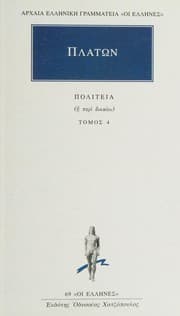
The Republic
Plato
by Plato
Plato's Republic has long defied classification: it is a philosophical masterpiece; it is acute political theory; it is great literature. Although certain inconsistencies have been subsequently discovered, philosophical and otherwise, there can be no doubt that The Republic is a work of genius. It has as its central problem the nature of justice. In a word, what is justice? From this common origin, however, the book divides at a broader level. There is first of all the mundane, represented in the first books by the refutation of proverbial morality and traditional society. But the middle books belong almost exclusively to pure philosophy. In these Plato examines the figure of the philosopher, metaphysics, and epistemology, an extended investigation that culminates in the allegory of the vision, visibility, and the sun as symbol of the good, or justice. It not until the delineation of the famous "Myth of the Cave" in Book VII, however, that the two realms: material and ideal, polity and philosophy, historical State and ideal State, virtue and ethics truly come together. The image of the liberated prisoner forsaking the light, compelled whether by force or obligation?Plato would say duty?to rejoin his companions in the murky darkness of the cave, is perhaps the key to the underlying unity of The Republic. It is in the individual that the two realms meet. Plato's aim, then, was to realize social and political stability on a foundation of moral and spiritual absolutes by which every man may live.