Shelfology Book Pairing
The Odyssey
by Homer
The Odyssey, translated by T. E. Lawrence, an epic 12,000-line poem composed over 2,700 years ago, is the first adventure story in Western literature. It describes the ten-year wanderings of Odysseus in his quest to return home after the Trojan War. Hounded by the sea-god Poseidon and championed by the goddess Athene, he encounters giants, sorceresses, and sea monsters before finally reaching his beloved Ithaca. There he must endure the taunts of the Suitors to his queen, Penelope, who have taken up residence in his palace. At once enchanting fairy tale and gripping drama, the Odyssey is eminently readable, not least for the rich complexity and magnetism of its hero. An inspiration to writers as diverse as Virgil, Swift, and Joyce, the Odyssey has proved enormously influential and continues to captivate readers of all ages.
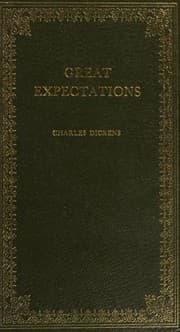
Great Expectations
Charles Dickens
by Charles Dickens
Great Expectations is Charles Dickens's thirteenth novel and his penultimate (completed) novel; a bildungsroman which depicts the personal growth and personal development of an orphan nicknamed Pip. It is Dickens's second novel, after David Copperfield, to be fully narrated in the first person. The novel was first published as a serial in Dickens's weekly periodical All the Year Round, from 1 December 1860 to August 1861. In October 1861, Chapman and Hall published the novel in three volumes. It is set among marshes in Kent, and in London, in the early to mid-1800s, and contains some of Dickens' most memorable scenes, including the opening, in a graveyard, where the young Pip is accosted by the escaped convict, Abel Magwitch. Great Expectations is full of extreme imagery - poverty; prison ships and chains, and fights to the death - and has a colourful cast of characters who have entered popular culture. These include the eccentric Miss Havisham, the cold and beautiful Estella, and Joe, the kind and generous blacksmith. Dickens's themes include wealth and poverty, love and rejection, and the eventual triumph of good over evil. Great Expectations is popular both with readers and literary critics, and has been translated into many languages, and adapted numerous times into various media. Upon its release, Thomas Carlyle spoke disparagingly of "all that Pip's nonsense". Later, George Bernard Shaw praised the novel, as "All of one piece and consistently truthfull." Dickens felt Great Expectations was his best work, calling it "a very fine, new and grotesque idea".