Shelfology Book Pairing
The Odyssey
by Homer
The Odyssey, translated by T. E. Lawrence, an epic 12,000-line poem composed over 2,700 years ago, is the first adventure story in Western literature. It describes the ten-year wanderings of Odysseus in his quest to return home after the Trojan War. Hounded by the sea-god Poseidon and championed by the goddess Athene, he encounters giants, sorceresses, and sea monsters before finally reaching his beloved Ithaca. There he must endure the taunts of the Suitors to his queen, Penelope, who have taken up residence in his palace. At once enchanting fairy tale and gripping drama, the Odyssey is eminently readable, not least for the rich complexity and magnetism of its hero. An inspiration to writers as diverse as Virgil, Swift, and Joyce, the Odyssey has proved enormously influential and continues to captivate readers of all ages.
A Portrait of the Artist as a Young Man
By James Joyce
by James Joyce
A Portrait of the Artist as a Young Man is Joyce's first novel, published after the previous success of his short story collection Dubliners. The novel is written in a modernist style, with dialog and narration blending together in a kind of stream-of-consciousness meant to invoke the blurriness of memory.Joyce originally planned writing a realist autobiographical novel of 63 chapters titled Stephen Hero. He abandoned the attempt halfway through, and refocused his efforts on Portrait, a shorter, sharper work in the modernist style. His alter-ego remained Stephen Dedalus, named after Daedalus, the mythological Greek craftsman and father of Icarus. Portrait was written while he was waiting for Dubliners to be published, a process that took eight years and so frustrated Joyce that he once threw the manuscript of Portrait into a fire, causing his family to run to save it.The novel closely traces Joyce's early years. Like his alter-ego Stephen, Joyce was born into a middle-class family and lived in Dublin as they descended into poverty; he rebelled against his Irish Catholic upbringing to become a star student at Dublin University, and put aside thoughts of priesthood or medicine, the other careers offered him, to become a writer. Joyce doesn't shy away from sensitive topics, presenting the discoveries of youth in all of their physical detail, including Stephen's teenage visits to prostitutes (which also mirror Joyce's youth, and were how he probably contracted the suspected syphilis that plagued his vision and tortured his health for the rest of his life), and the homosexual explorations of children at a Jesuit school.The writing is in the free indirect style, allowing the narrator to both focus on Stephen and present characters and events through his eyes, until the last chapter, where Stephen's first-person diary entries suggest he's finally found his voice. As the novel progresses, the syntax and vocabulary also grow in complexity, reflecting Stephen's own developmen
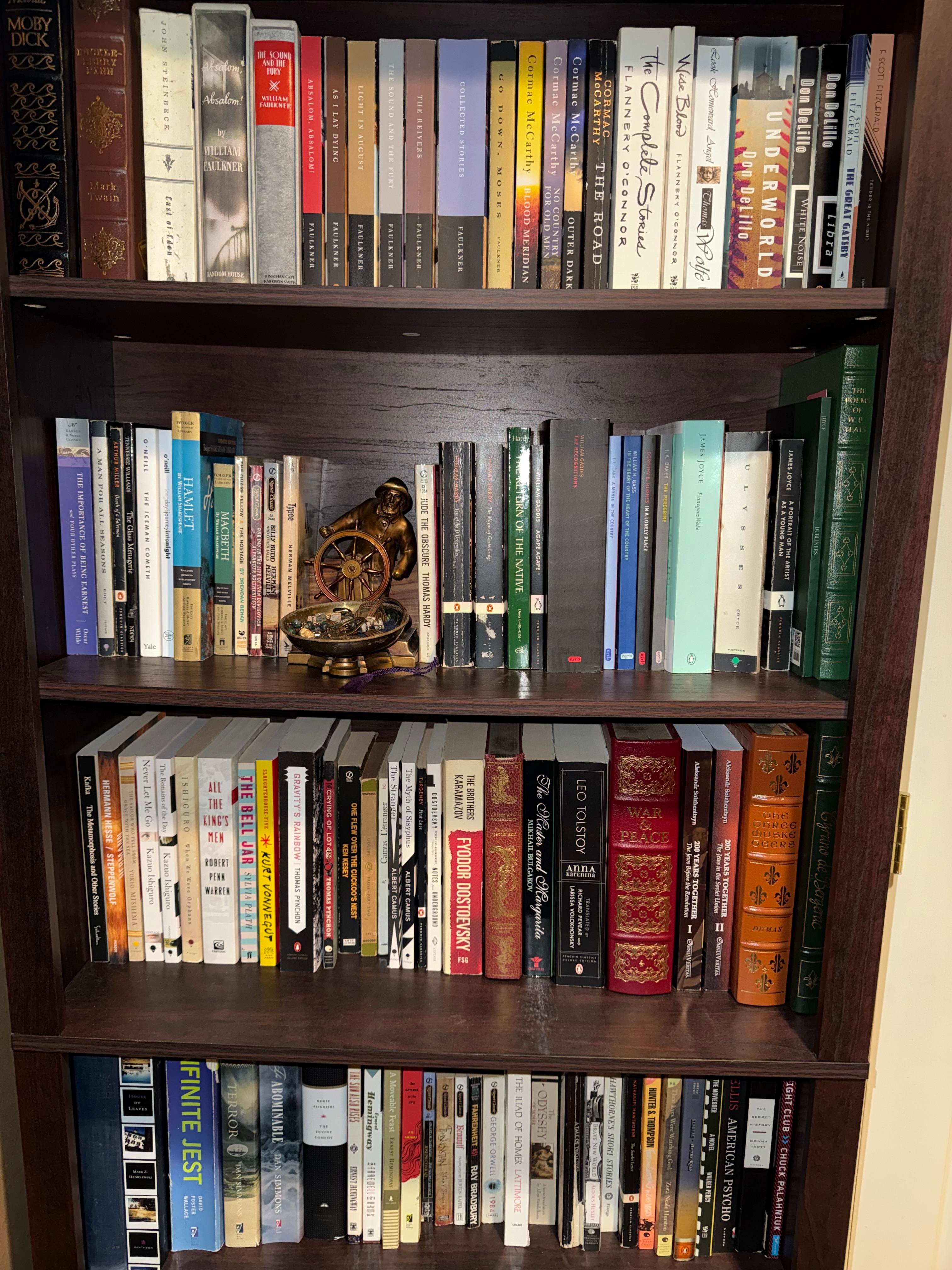
These books are Shelf Soulmates
These books sit together on 7 different collections in our database