Shelfology Book Pairing
Crime and Punishment
A Novel by the Russian Author Fyodor Dostoevsky
by Fyodor Dostoevsky
Fyodor Dostoevsky's classic tale of Rodion Raskolnikov, the murder he commits as an exploration of the human condition, and the crushing criminal and psychological consequences. The two years before he wrote Crime and Punishment (1866) had been bad ones for Dostoyevsky. His wife and brother had died; the magazine he and his brother had started, Epoch, collapsed under its load of debt; and he was threatened with debtor's prison. With an advance that he managed to wangle for an unwritten novel, he fled to Wiesbaden, hoping to win enough at the roulette table to get himself out of debt. Instead, he lost all his money; he had to pawn his clothes and beg friends for loans to pay his hotel bill and get back to Russia. One of his begging letters went to a magazine editor, asking for an advance on yet another unwritten novel - which he described as Crime and Punishment. One of the supreme masterpieces of world literature, Crime and Punishment catapulted Dostoyevsky to the forefront of Russian writers and into the ranks of the world's greatest novelists. Drawing upon experiences from his own prison days, the author recounts in feverish, compelling tones the story of Raskolnikov, an impoverished student tormented by his own nihilism, and the struggle between good and evil. Believing that he is above the law, and convinced that humanitarian ends justify vile means, he brutally murders an old woman - a pawnbroker whom he regards as "stupid, ailing, greedy...good for nothing." Overwhelmed afterwards by feelings of guilt and terror, Raskolnikov confesses to the crime and goes to prison. There he realizes that happiness and redemption can only be achieved through suffering. Infused with forceful religious, social, and philosophical elements, the novel was an immediate success. This extraordinary, unforgettable work is reprinted here in the authoritative Constance Garnett translation. Others novels and novellas by Dostoevsky are: (1846) Poor Folk (novella) (1846) The Double (novella) (1847) The Landlady (novella) (1849) Netochka Nezvanova (unfinished) (1859) Uncle's Dream (novella) (1859) The Village of Stepanchikovo (1861) Humiliated and Insulted (1862) The House of the Dead (1864) Notes from Underground (novella) (1866) Crime and Punishment (1867) The Gambler (novella) (1869) The Idiot (1870) The Eternal Husband (novella) (1872) Demons (also titled: The Possessed, The Devils) (1875) The Adolescent (1880) The Brothers Karamazov
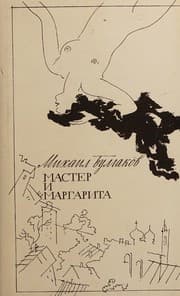
The Master and Margarita
By Mikhail Bulgakov - Bitig Books Classics
by Mikhail Bulgakov
An audacious revision of the stories of Faust and Pontius Pilate, The Master and Margarita is recognized as one of the essential classics of modern Russian literature. The novel's vision of Soviet life in the 1930s is so ferociously accurate that it could not be published during its author's lifetime and appeared only in a censored edition in the 1960s. Its truths are so enduring that its language has become part of the common Russian speech.One hot spring, the devil arrives in Moscow, accompanied by a retinue that includes a beautiful naked witch and an immense talking black cat with a fondness for chess and vodka. The visitors quickly wreak havoc in a city that refuses to believe in either God or Satan. But they also bring peace to two unhappy Muscovites: one is the Master, a writer pilloried for daring to write a novel about Christ and Pontius Pilate; the other is Margarita, who loves the Master so deeply that she is willing literally to go to hell for him.