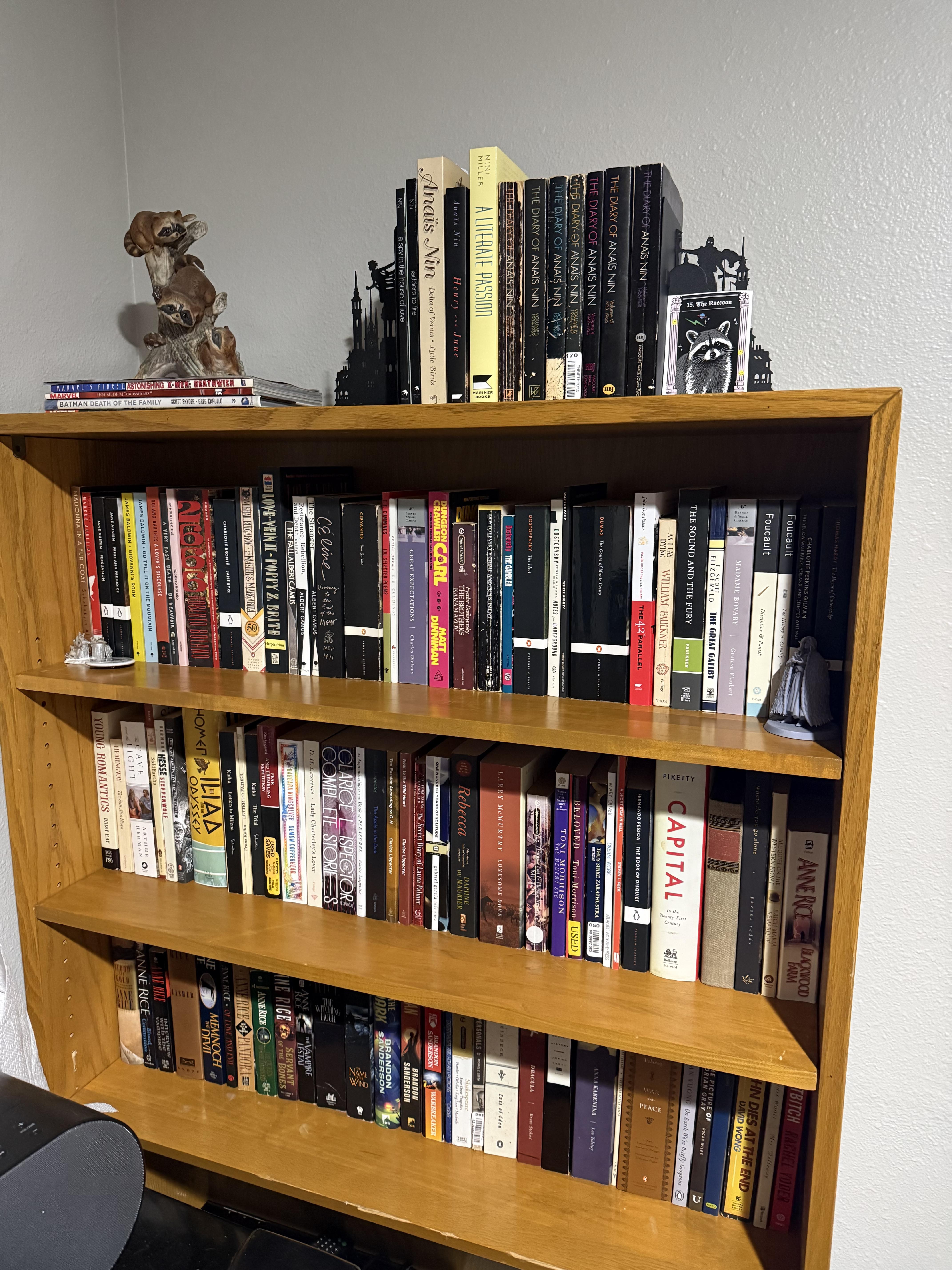
Shelfology Book Pairing
Crime and Punishment
A Novel by the Russian Author Fyodor Dostoevsky
by Fyodor Dostoevsky
Fyodor Dostoevsky's classic tale of Rodion Raskolnikov, the murder he commits as an exploration of the human condition, and the crushing criminal and psychological consequences. The two years before he wrote Crime and Punishment (1866) had been bad ones for Dostoyevsky. His wife and brother had died; the magazine he and his brother had started, Epoch, collapsed under its load of debt; and he was threatened with debtor's prison. With an advance that he managed to wangle for an unwritten novel, he fled to Wiesbaden, hoping to win enough at the roulette table to get himself out of debt. Instead, he lost all his money; he had to pawn his clothes and beg friends for loans to pay his hotel bill and get back to Russia. One of his begging letters went to a magazine editor, asking for an advance on yet another unwritten novel - which he described as Crime and Punishment. One of the supreme masterpieces of world literature, Crime and Punishment catapulted Dostoyevsky to the forefront of Russian writers and into the ranks of the world's greatest novelists. Drawing upon experiences from his own prison days, the author recounts in feverish, compelling tones the story of Raskolnikov, an impoverished student tormented by his own nihilism, and the struggle between good and evil. Believing that he is above the law, and convinced that humanitarian ends justify vile means, he brutally murders an old woman - a pawnbroker whom he regards as "stupid, ailing, greedy...good for nothing." Overwhelmed afterwards by feelings of guilt and terror, Raskolnikov confesses to the crime and goes to prison. There he realizes that happiness and redemption can only be achieved through suffering. Infused with forceful religious, social, and philosophical elements, the novel was an immediate success. This extraordinary, unforgettable work is reprinted here in the authoritative Constance Garnett translation. Others novels and novellas by Dostoevsky are: (1846) Poor Folk (novella) (1846) The Double (novella) (1847) The Landlady (novella) (1849) Netochka Nezvanova (unfinished) (1859) Uncle's Dream (novella) (1859) The Village of Stepanchikovo (1861) Humiliated and Insulted (1862) The House of the Dead (1864) Notes from Underground (novella) (1866) Crime and Punishment (1867) The Gambler (novella) (1869) The Idiot (1870) The Eternal Husband (novella) (1872) Demons (also titled: The Possessed, The Devils) (1875) The Adolescent (1880) The Brothers Karamazov
Madonna in a Fur Coat
Sabahattin Ali's Cursed Light
by Sabahattin Ali
"Remember. There are words that outlive bullets." Sabahattin Ali is not only the most beloved figure in Turkish literature, but also its most tragic. He lived to write, and he paid the price for living. This study examines the author's life as a preliminary reading of his works. The text begins with "Sis" (Eğridere, 1907), a legacy of Ali Selahattin Bey's bureaucratic rootlessness, and concludes with "İhanet" (1948), which takes place in the Thracian forests. This epic is the story of an epiphany that Sabahattin Ali calls "The Cursed Light" a tragic epiphany where the courage to see the truth is paid with life. The Path of This Book: Kuyucaklı Yusuf: The first, resounding blow of the rebellion born of the rootlessness of the author's childhood against the moral decay of Anatolia. The Devil Within Us: The shocking anatomy of the hypocrisy, hypocrisy, and betrayal encountered in intellectual circles by an intellectual conscience relocating from Berlin to Ankara. Madonna in a Fur Coat: The lyrical elegy of the author, seeking eternal refuge for his soul amidst political oppression and exile, finding it in Maria Puder's impossible love. The text also serves as a political archive, illuminating the author's epic struggle with the Marko Pasha magazine, his imprisonment, and ultimately, the backdrop of his assassination. His death was not a simple smuggling case; it became a symbol of a voice silenced by a cold, bureaucratic execution. This book is a must for anyone who wants to understand why Sabahattin Ali was not only a writer but also an intellectual who paid the price for truth with his life. His voice continues to outlive the bullets.
These books are No Strangers
These books sit together on 4 different collections in our database