Shelfology Book Pairing
The Road to Serfdom
Illustrated Edition
by Friedrich A. Von Hayek
The Road to Serfdom By Friedrich A. Hayek New Edition The very magnitude of the outrages committed by the National Socialists has strengthened the assurance that a totalitarian system cannot happen here. But let us remember that 15 years ago the possibility of such a thing happening in Germany would have appeared just as fantastic not only to nine-tenths of the Germans themselves, but also to the most hostile foreign observer. There are many features which were then regarded as 'typically German' which are now equally familiar in America and England, and many symptoms that point to a further development in the same direction: the increasing veneration for the state, the fatalistic acceptance of 'inevitable trends', the enthusiasm for 'organization' of everything (we now call it 'planning'). The character of the danger is, if possible, even less understood here than it was in Germany. The supreme tragedy is still not seen that in Germany it was largely people of good will who, by their socialist policies, prepared the way for the forces which stand for everything they detest. Few recognize that the rise of fascism and the road to serfdom. Marxism was not a reaction against the socialist trends of the preceding period but a necessary outcome of those tendencies. Yet it is significant that many of the leaders of these movements, from Mussolini down (and including Laval and Quisling) began as socialists and ended as fascists or Nazis. In the democracies at present, many who sincerely hate all of Nazism's manifestations are working for ideals whose realization would lead straight to the abhorred tyranny. Most of the people whose views influence developments are in some measure socialists. They believe that our economic life should be 'consciously directed' that we should substitute 'economic planning' for the competitive system. Yet is there a greater tragedy imaginable than that, in our endeavour consciously to shape our future in accordance with high ideals, we should in fact unwittingly produce the very opposite of what we have been striving for?
Anna Karenina (Illustrated)
by Leo Tolstoy
Anna Karenina (Russian: «Анна Каренина»; Russian pronunciation: ) is a novel by the Russian writer Leo Tolstoy, published in serial installments from 1873 to 1877 in the periodical The Russian Messenger. Tolstoy clashed with editor Mikhail Katkov over political issues that arose in the final installment (Tolstoy's unpopular views of volunteers going to Serbia); therefore, the novel's first complete appearance was in book form in 1878. Widely regarded as a pinnacle in realist fiction, Tolstoy considered Anna Karenina his first true novel, when he came to consider War and Peace to be more than a novel. Fyodor Dostoyevsky declared it to be "flawless as a work of art". His opinion was shared by Vladimir Nabokov, who especially admired "the flawless magic of Tolstoy's style", and by William Faulkner, who described the novel as "the best ever written". The novel is currently enjoying popularity, as demonstrated by a recent poll of 125 contemporary authors by J. Peder Zane, published in 2007 in "The Top Ten" in Time, which declared that Anna Karenina is the "greatest novel ever written"
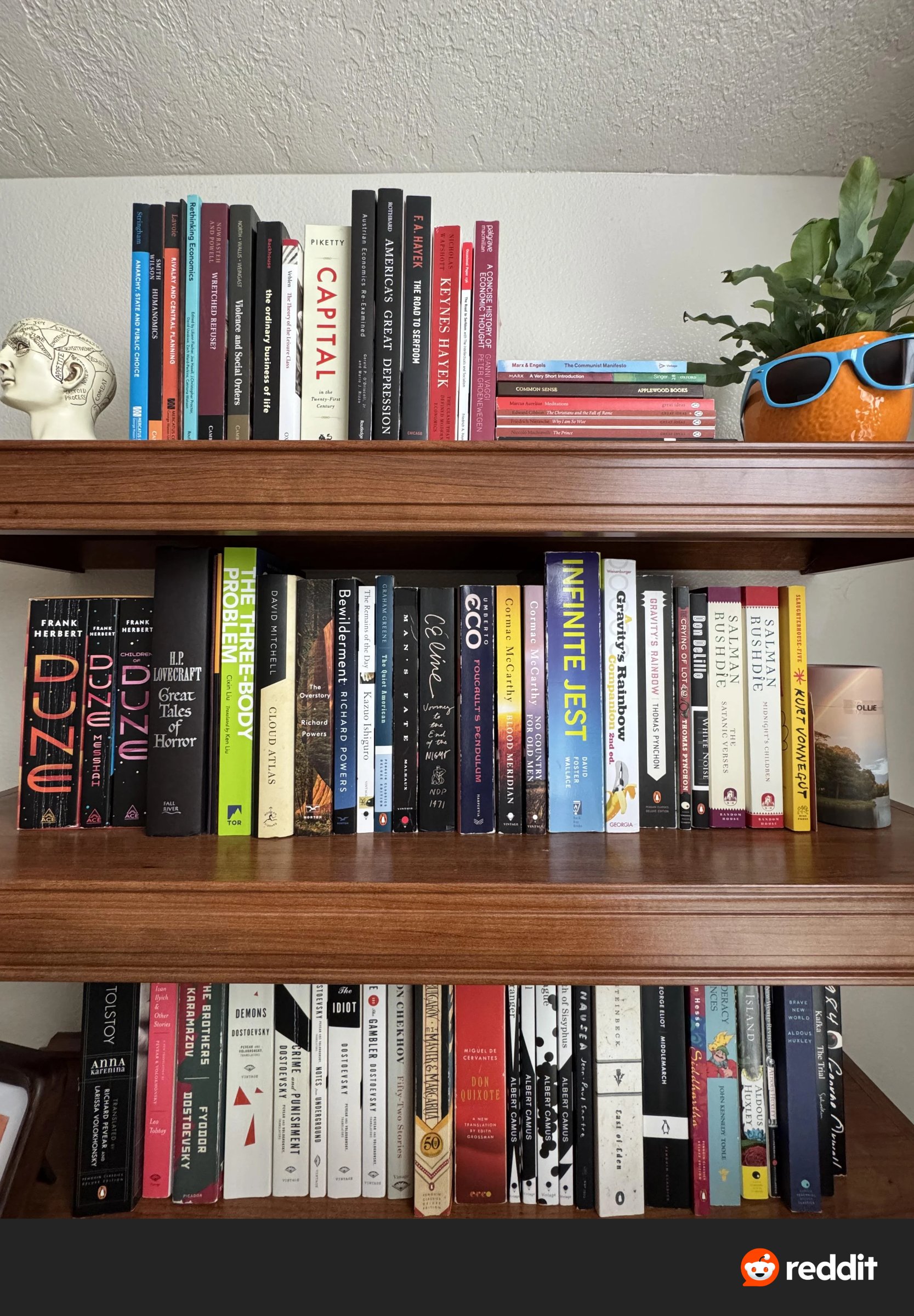
These books are No Strangers
These books sit together on 3 different collections in our database