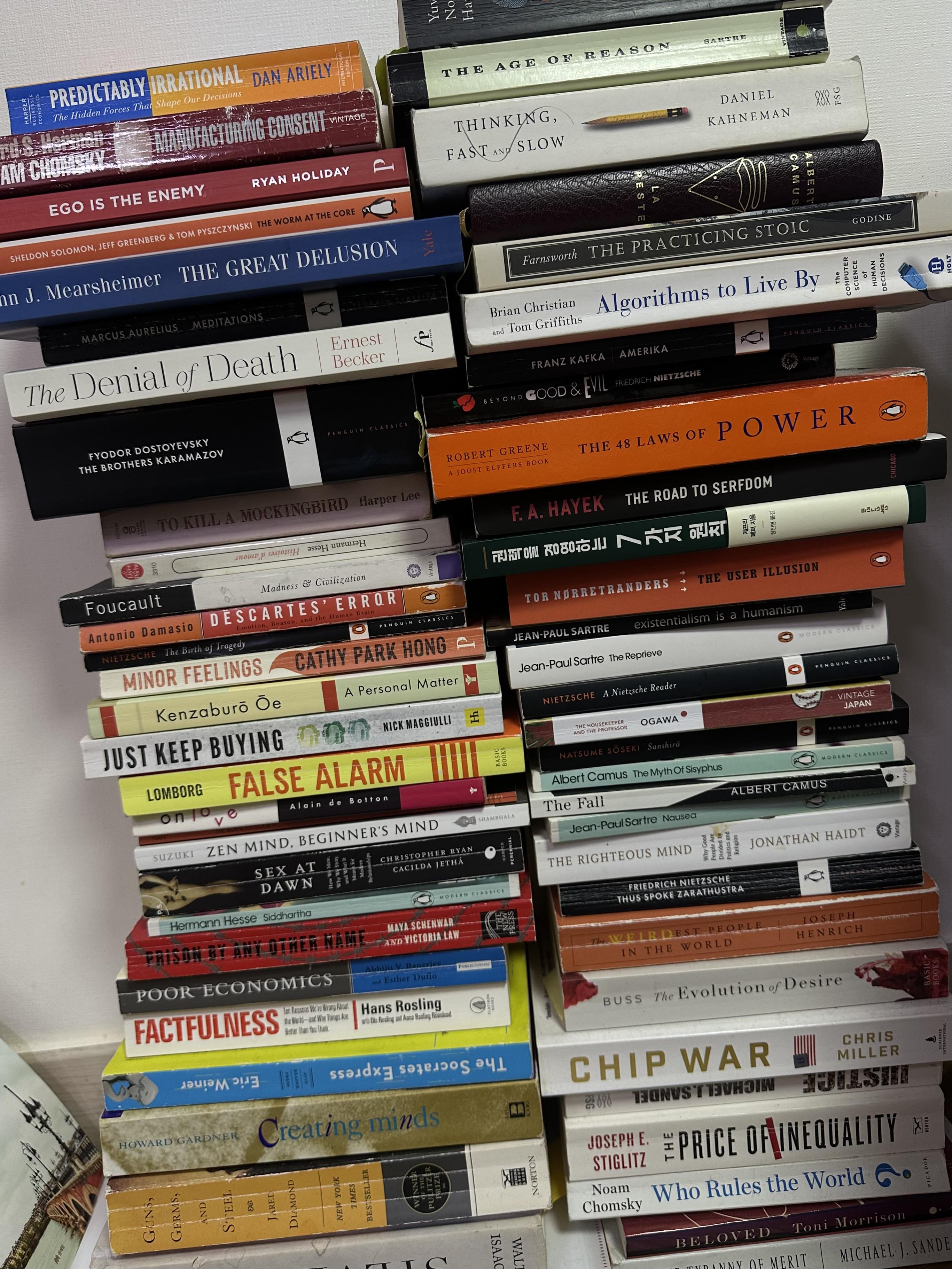
Shelfology Book Pairing
The Road to Serfdom
Illustrated Edition
by Friedrich A. Von Hayek
The Road to Serfdom By Friedrich A. Hayek New Edition The very magnitude of the outrages committed by the National Socialists has strengthened the assurance that a totalitarian system cannot happen here. But let us remember that 15 years ago the possibility of such a thing happening in Germany would have appeared just as fantastic not only to nine-tenths of the Germans themselves, but also to the most hostile foreign observer. There are many features which were then regarded as 'typically German' which are now equally familiar in America and England, and many symptoms that point to a further development in the same direction: the increasing veneration for the state, the fatalistic acceptance of 'inevitable trends', the enthusiasm for 'organization' of everything (we now call it 'planning'). The character of the danger is, if possible, even less understood here than it was in Germany. The supreme tragedy is still not seen that in Germany it was largely people of good will who, by their socialist policies, prepared the way for the forces which stand for everything they detest. Few recognize that the rise of fascism and the road to serfdom. Marxism was not a reaction against the socialist trends of the preceding period but a necessary outcome of those tendencies. Yet it is significant that many of the leaders of these movements, from Mussolini down (and including Laval and Quisling) began as socialists and ended as fascists or Nazis. In the democracies at present, many who sincerely hate all of Nazism's manifestations are working for ideals whose realization would lead straight to the abhorred tyranny. Most of the people whose views influence developments are in some measure socialists. They believe that our economic life should be 'consciously directed' that we should substitute 'economic planning' for the competitive system. Yet is there a greater tragedy imaginable than that, in our endeavour consciously to shape our future in accordance with high ideals, we should in fact unwittingly produce the very opposite of what we have been striving for?
Zen Mind, Beginner's Mind
Informal Talks on Zen Meditation and Practice
by Shunryu Suzuki
"In the beginner's mind there are many possibilities, but in the expert's there are few." So begins this most beloved of all American Zen books. Seldom has such a small handful of words provided a teaching as rich as has this famous opening line of Shunryu Suzuki's classic. In a single stroke, the simple sentence cuts through the pervasive tendency students have of getting so close to Zen as to completely miss what it's all about. An instant teaching on the first page. And that's just the beginning. In the thirty years since its original publication, Zen Mind, Beginner's Mind has become one of the great modern Zen classics, much beloved, much re-read, and much recommended as the best first book to read on Zen. Suzuki Roshi presents the basics—from the details of posture and breathing in zazen to the perception of nonduality—in a way that is not only remarkably clear, but that also resonates with the joy of insight from the first to the last page. It's a book to come back to time and time again as an inspiration to practice.
These books are Distant Cousins
These books sit together on 2 different collections in our database