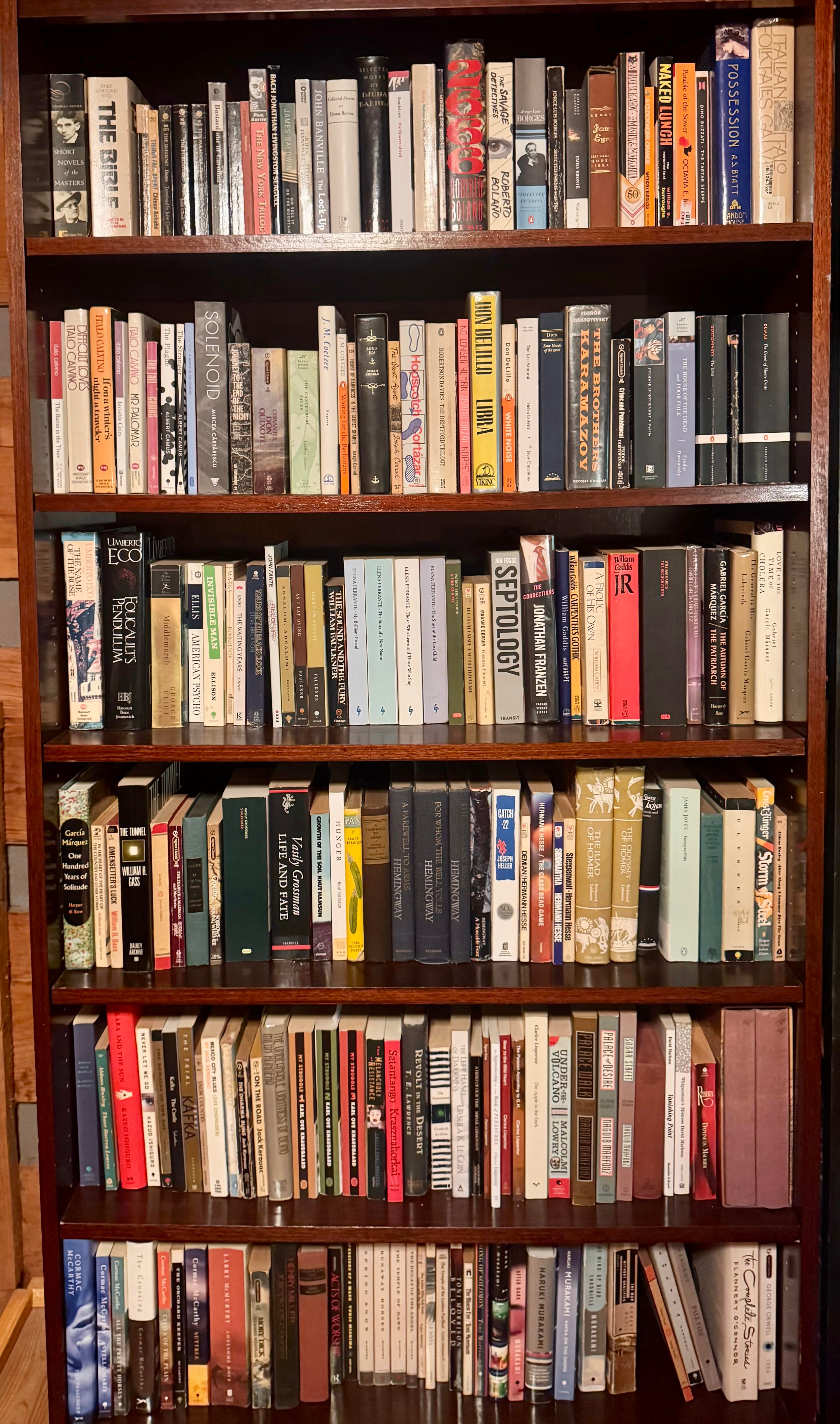
Shelfology Book Pairing
For Whom the Bell Tolls
by Ernest Hemingway
In 1937 Ernest Hemingway traveled to Spain to cover the civil war there for the North American Newspaper Alliance. Three years later he completed the greatest novel to emerge from “the good fight,” For Whom the Bell Tolls. The story of Robert Jordan, a young American in the International Brigades attached to an antifascist guerilla unit in the mountains of Spain, it tells of loyalty and courage, love and defeat, and the tragic death of an ideal. In his portrayal of Jordan's love for the beautiful Maria and his superb account of El Sordo's last stand, in his brilliant travesty of La Pasionaria and his unwillingness to believe in blind faith, Hemingway surpasses his achievement in The Sun Also Rises and A Farewell to Arms to create a work at once rare and beautiful, strong and brutal, compassionate, moving, and wise. “If the function of a writer is to reveal reality,” Maxwell Perkins wrote to Hemingway after reading the manuscript, “no one ever so completely performed it.” Greater in power, broader in scope, and more intensely emotional than any of the author's previous works, it stands as one of the best war novels of all time.
Lord Jim
Joseph Conrad
by Joseph Conrad
Lord Jim by Joseph Conrad. Lord Jim is a novel by Joseph Conrad originally published as a serial in Blackwood's Magazine from October 1899 to November 1900. An early and primary event in the story is the abandonment of a passenger ship in distress by its crew, including a young British seaman named Jim. He is publicly censured for this action and the novel follows his later attempts at coming to terms with himself and his past. When this novel first appeared in book form a notion got about that I had been bolted away with. Some reviewers maintained that the work starting as a short story had got beyond the writer's control. One or two discovered internal evidence of the fact, which seemed to amuse them. They pointed out the limitations of the narrative form. They argued that no man could have been expected to talk all that time, and other men to listen so long. It was not, they said, very credible. After thinking it over for something like sixteen years, I am not so sure about that. Men have been known, both in the tropics and in the temperate zone, to sit up half the night 'swapping yarns'. This, however, is but one yarn, yet with interruptions affording some measure of relief; and in regard to the listeners' endurance, the postulate must be accepted that the story was interesting.
These books are Distant Cousins
These books sit together on 2 different collections in our database