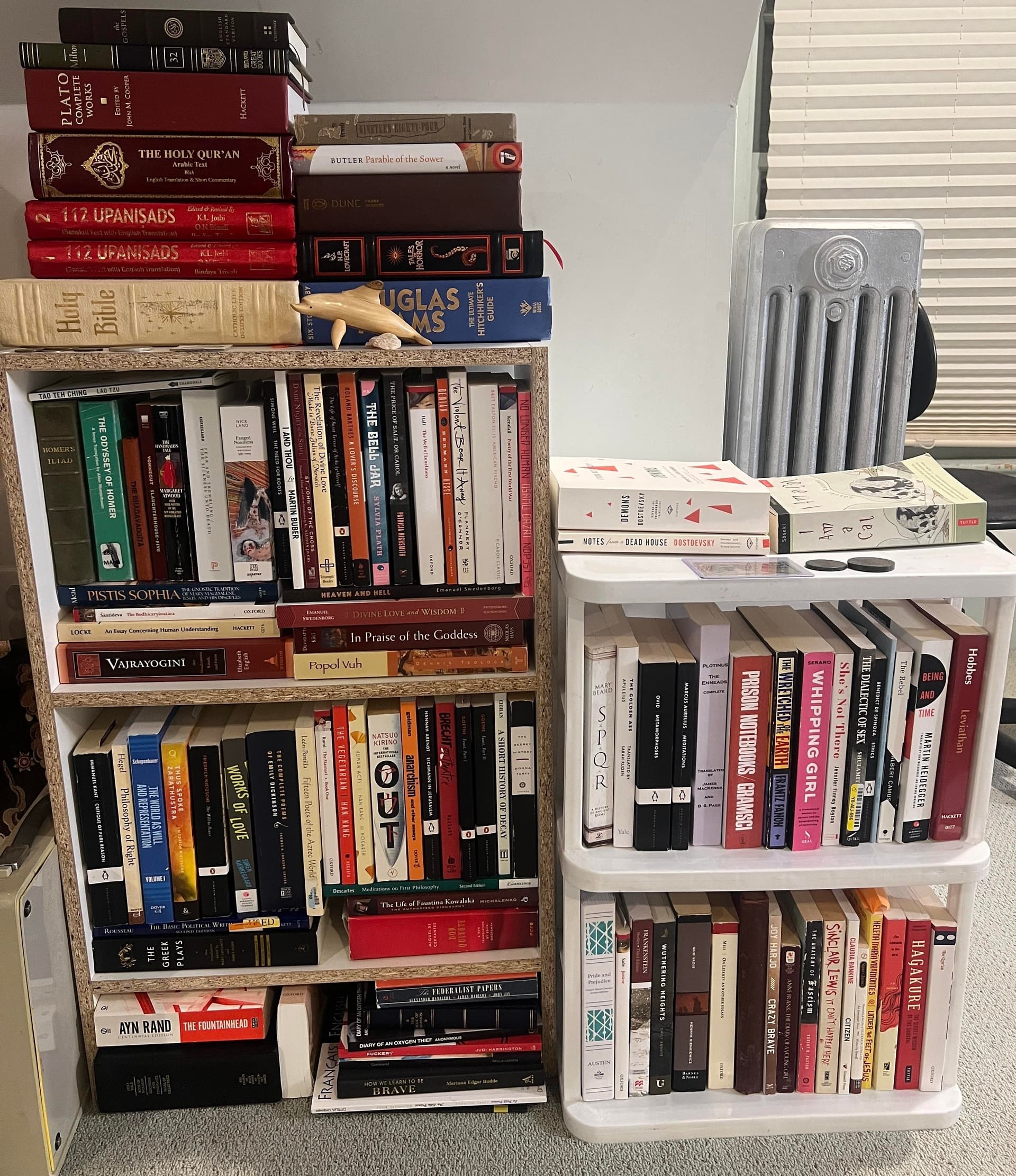
Shelfology Book Pairing
Fear and Trembling
The sickness unto death
by Søren Kierkegaard
Soren Kierkegaard was a Danish philosopher, theologian and religious author interested in human psychology. He is regarded as a leading pioneer of existentialism and one of the greatest philosophers of the 19th Century. In FEAR AND TREMBLING, Kierkegaard wanted to understand the anxiety that must have been present in Abraham when God commanded him to offer his son as a human sacrifice. Abraham had a choice to complete the task or to forget it. He resigned himself to the loss of his son, acting according to his faith. In other words, one must be willing to give up all his or her earthly possessions in infinite resignation and must also be willing to give up whatever it is that he or she loves more than God. Abraham had passed the test -- his love for God proved greater than anything else in him. And because a good and just Creator would not want a father to kill his son, God intervened at the last moment to prevent the sacrifice.
The Will to Power
by Friedrich Wilhelm Nietzsche
One of the most well-known works of philosophy is The Will to Power, which was assembled from the notebooks. The first critical edition in any language is presented here. The Will to Power has repeatedly been disparaged after World War II, despite being incorrectly thought to be Nietzsche's most systematic work up until the Nazi era. It actually offers a remarkable selection from Nietzsche's notebooks, organised by topic to make it easy for readers to find what the philosopher had to say on a variety of topics.
These books are Distant Cousins
These books sit together on 2 different collections in our database