Shelfology Book Pairing
The Birth House
by Ami McKay
Prologue -- My house stands at the edge of the earth. Together, the house and I have held strong against the churning tides of Fundy. Two sisters, stubborn in our bones. -- My father, Judah Rare, built this farmhouse in 1917. It was my wedding gift. A strong house for a Rare woman, he said. I was eighteen. He and his five brothers, shipbuilders by trade, raised her worthy from timbers born on my grand-father's land. Oak for stability and certainty, yellow birch for new life and change, spruce for protection from the world outside. Father was an intuitive carpenter, carrying out his work like holy ritual. His callused hands, veined with pride, had a memory for measure and a knowing of what it takes to withstand the sea. -- Strength and a sense of knowing, that's what you have to have to live in the Bay. Each morning you set your sights on the tasks ahead and hope that when the day is done you're farther along than when you started. Our little village, perched on the crook of God's finger, has always been ruled by storm and season. The men did whatever they had to do to get by. They joked with one another in fire-warmed kitchens after sunset, smoking their pipes, someone bringing out a fiddle . . . laughing as they chorused, no matter how rough, we can take it. The seasons were reflected in their faces, and in the movement of their bodies. When it was time for the shad, herring and cod to come in, they were fishermen, dark with tiresome wet from the sea. When the deer began to huddle on the back of the mountain, they became hunters and woodsmen. When spring came, they worked the green-scented earth, planting crops that would keep, potatoes, cabbage, carrots, turnips. Summer saw their weathered hands building ships and haying fields, and sunsets that ribboned over the water, daring the skies to turn night. The long days were filled with pride and ceremony as mighty sailing ships were launched from the shore. The Lauretta, The Reward, The Nordica, The Bluebird, The Huntley. My father said he'd scour two hundred acres of forest just to find the perfect trees to build a three-masted schooner. Tall yellow birch, gently arched by northwesterly winds, was highly prized. He could spot the keel in a tree's curve and shadow, the return of the tide set in the grain. -- Men wagered their lives with the sea for the honour of these vessels. Each morning they watched for the signs. Red skies in morning, sailors take warning. Each night they looked to the heavens, spotting starry creatures, or the point of a dragon's tail. They told themselves that these were promises from God, that He would keep the wiry cold fingers of the sea from grabbing at them, from taking their lives. Sometimes men were taken. On those dark days the men who were left behind sat down together and made conversation of every detail, hitching truth to wives' tales while mending their nets. -- As the men bargained with the elements, the women tended to matters at home. They bartered with each other to fill their pantries and clothe their children. Grandmothers, aunts and sisters taught one another to stitch and cook and spin. On Sunday mornings mothers bent their knees between the stalwart pews at the Union Church, praying they would have enough. With hymnals clutched against their breasts, they told the Lord they would be ever faithful if their husbands were spared. -- When husbands, fathers and sons were kept out in the fog longer than was safe, the women stood at their windows, holding their lamps, a chorus of lady moons beckoning their lovers back to shore. Waiting, they hushed their children to sleep and listened for the voice of the moon in the crashing waves. In the secret of the night, mothers whispered to their daughters that only the moon could force the waters to submit. It was the moon's voice that called the men home, her voice that turned the tides of womanhood, her voice that pulled their babies into the light of birth. -- My house became the birth house. That's what the women came to call it, knocking on the door, ripe with child, water breaking on the porch. First-time mothers full of questions, young girls in trouble and seasoned women with a brood already at home. (I called those babies "toesies," because they were more than their mamas could count on their fingers.) They all came to the house, wailing and keening their babies into the world. I wiped their feverish necks with cool, moist cloths, spooned porridge and hot tea into their tired bodies, talked them back from outside of themselves. -- Ginny, she had two . . . -- Sadie Loomer, she had a girl here. -- Precious, she had twins . . . twice. -- Celia had six boys, but she was married to my brother Albert . . . Rare men always have boys. -- Iris Rose, she had Wrennie . . . -- All I ever wanted was to keep them safe. -- Part One -- Around the year 1760, a ship of Scotch immigrants came to be wrecked on the shores of this place. Although the vessel was lost, her passengers and crew managed to find shelter here. They struggled through the winter - many taking ill, the women losing their children, the men making the difficult journey down North Mountain to the valley below, carrying sacks of potatoes and other goods back to their temporary home, now called Scots Bay. -- In the spring, when all who had been stranded chose to make their way to more established communities, the daughter of the ship's captain, Annie MacIssac, stayed behind. She had fallen in love with a Mi'kmaq man she called Silent Rare. -- On the evening of a full moon in June, Silent went out in his canoe to catch the shad that were spawning around the tip of Cape Split. As the night wore on, Annie began to worry that some ill had befallen her love. She looked across the water for signs of him but found nothing. She walked to the cove where they had first met and began to call out to him, promising her heart, her fidelity and a thousand sons to his name. The moon, seeing Annie's sadness, began to sing, forcing the waves inland, strong and fast, bringing Silent safely back to his lover. -- Since that time, every child born from the Rare name has been male, and even now, when the moon is full, you can hear her voice, the voice of the moon, singing the sailors home. -- -A Rare Family History, 1850 -- 1 -- Ever since I can remember, people have had more than enough to say about me. As the only daughter in five generations of Rares, most figure I was changed by faeries or not my father's child. Mother works and prays too hard to have anyone but those with the cruellest of tongues doubt her devotion to my father. When there's no good explanation for something, people of the Bay find it easier to believe in mermaids and moss babies, to call it witchery and be done with it. Long after the New England Planters' seed wore the Mi'kmaq out of my family's blood, I was born with coal black hair, cinnamon skin and a caul over my face. A foretelling. A sign. A gift that supposedly allows me to talk to animals, see people's deaths and hear the whisperings of spirits. A charm for protection against drowning. -- When one of Laird Jessup's Highland heifers gave birth to a three-legged albino calf, talk followed and people tried to guess what could have made such a creature. In the end, most people blamed me for it. I had witnessed the cow bawling her calf onto the ground. I had been the one who ran to the Jessups' to tell the young farmer about the strange thing that had happened. Dora talked to ghosts, Dora ate bat soup, Dora slit the Devil's throat and flew over the chicken coop. My classmates chanted that verse between the slats of the garden gate, along with all the other words their parents taught them not to say. Of course, there are plenty of schoolyard stories about Miss B. too, most of them ending with, if your cat or your baby goes missing, you'll know where to find the bones. It's talk like that that's made us such good friends. Miss B. says she's glad for gossip. "It keep folks from comin' to places they don't belong." -- Most days I wake up and say a prayer. I want, I wish, I wait for something to happen to me. While I thank God for all good things, I don't say this verse to Him, or to Jesus or even to Mary. They are far too busy to be worrying about the affairs and wishes of my heart. No, I say my prayer more to the air than anything else, hoping it might catch on the wind and find its way to anything, to something that's mine. Mother says, a young lady should take care with what she wishes for. I'm beginning to think she's right. -- From the Hardcover edition.

Hamlet
by William Shakespeare
The Tragedy of Hamlet, Prince of Denmark, often shortened to Hamlet (/ˈh�mlᵻt/), is a tragedy written by William Shakespeare at an uncertain date between 1599 and 1602. Set in the Kingdom of Denmark, the play dramatises the revenge Prince Hamlet is called to wreak upon his uncle, Claudius, by the ghost of Hamlet's father, King Hamlet. Claudius had murdered his own brother and seized the throne, also marrying his deceased brother's widow. Hamlet is Shakespeare's longest play, and is ranked among the most powerful and influential tragedies in English literature, with a story capable of "seemingly endless retelling and adaptation by others". The play likely was one of Shakespeare's most popular works during his lifetime, and still ranks among his most performed, topping the performance list of the Royal Shakespeare Company and its predecessors in Stratford-upon-Avon since 1879. It has inspired many other writers - from Johann Wolfgang von Goethe and Charles Dickens to James Joyce and Iris Murdoch - and has been described as "the world's most filmed story after Cinderella".Summary : The protagonist of Hamlet is Prince Hamlet of Denmark, son of the recently deceased King Hamlet, and nephew of King Claudius, his father's brother and successor. Claudius hastily married King Hamlet's widow, Gertrude, Hamlet's mother, and took the throne for himself. Denmark has a long-standing feud with neighboring Norway, which culminated when King Hamlet slew King Fortinbras of Norway in a battle years ago. Although Denmark defeated Norway, and the Norwegian throne fell to King Fortinbras's infirm brother, Denmark fears that an invasion led by the dead Norwegian king's son, Prince Fortinbras, is imminent. On a cold night on the ramparts of Elsinore, the Danish royal castle, the sentries Bernardo and Marcellus and Hamlet's friend Horatio encounter a ghost that looks like the late King Hamlet. They vow to tell Prince Hamlet what they have witnessed.As the Court gathers the next day, while King Claudius and Queen Gertrude discuss affairs of state with their elderly adviser Polonius, Hamlet looks on glumly. After the Court exits, Hamlet despairs of his father's death and his mother's hasty remarriage. Learning of the Ghost from Horatio, Hamlet resolves to see it himself. Soon thereafter, Ophelia rushes to her father, telling him that Hamlet arrived at her door the prior night half-...Biography : William Shakespeare (26 April 1564 (baptised) - 23 April 1616) was an English poet, playwright, and actor, widely regarded as the greatest writer in the English language and the world's pre-eminent dramatist. He is often called England's national poet, and the "Bard of Avon". His extant works, including collaborations, consist of approximately 38 plays, 154 sonnets, two long narrative poems, and a few other verses, some of uncertain authorship. His plays have been translated into every major living language and are performed more often than those of any other playwright...Extrait : MARCELLUS'Tis gone, and will not answer.BERNARDO How now, Horatio! you tremble and look pale: Is not this something more than fantasy? What think you on't?HORATIOBefore my God, I might not this believe Without the sensible and true avouch Of mine own eyes.MARCELLUSIs it not like the king?HORATIOAs thou art to thyself: Such was the very armour he had on When he the ambitious Norway combated; So frown'd he once, when, in an angry parle, He smote the sledded Polacks on the ice. 'Tis strange.MARCELLUS Thus twice before, and jump at this dead hour, With martial stalk hath he gone by our watchHORATIO In what particular thought to work I know ¬ But in the gross and scope of my opinion, This bodes some strange eruption to our state.MARCELLUS Good now, sit down, and tell me, he that knows...
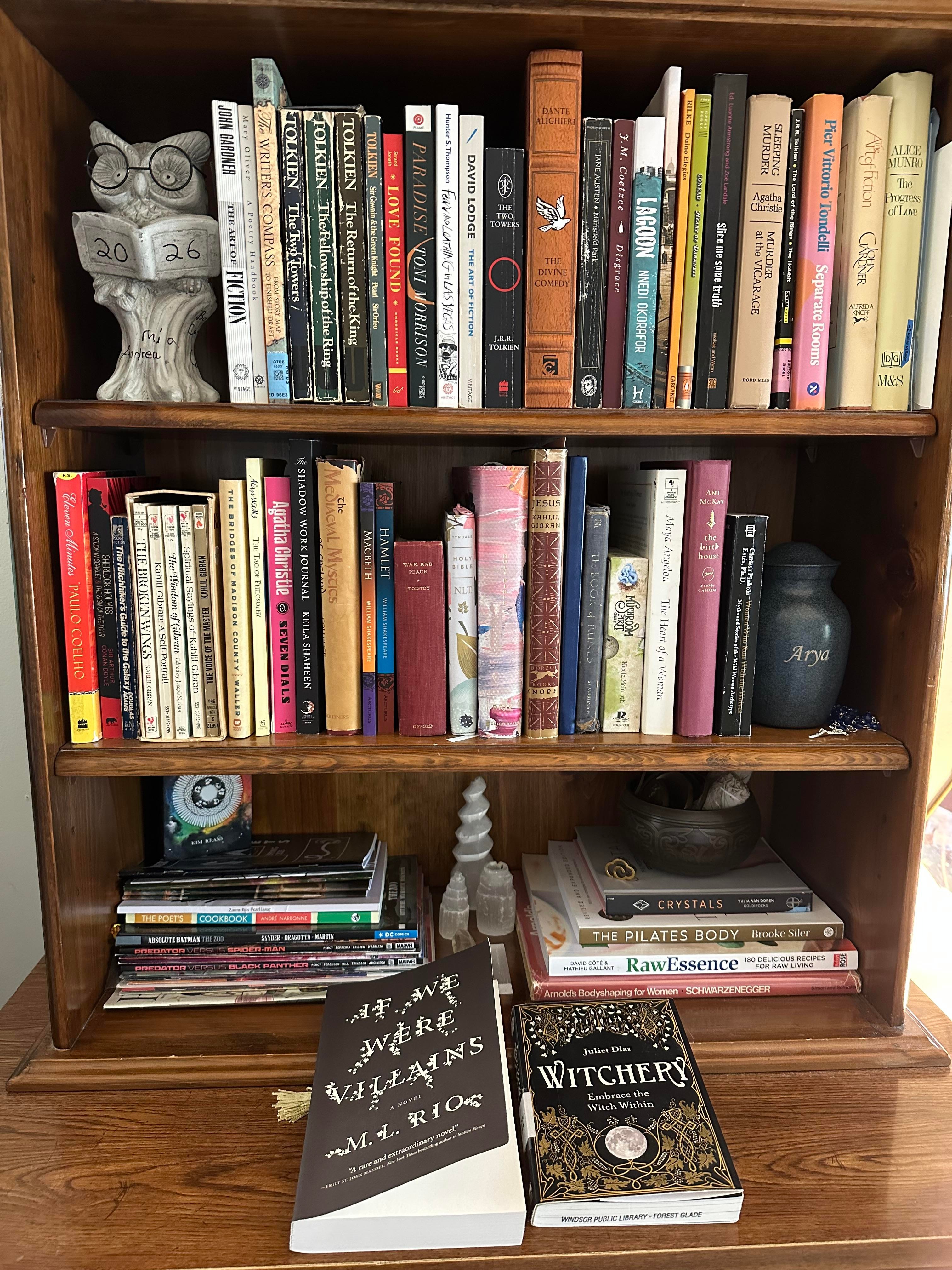
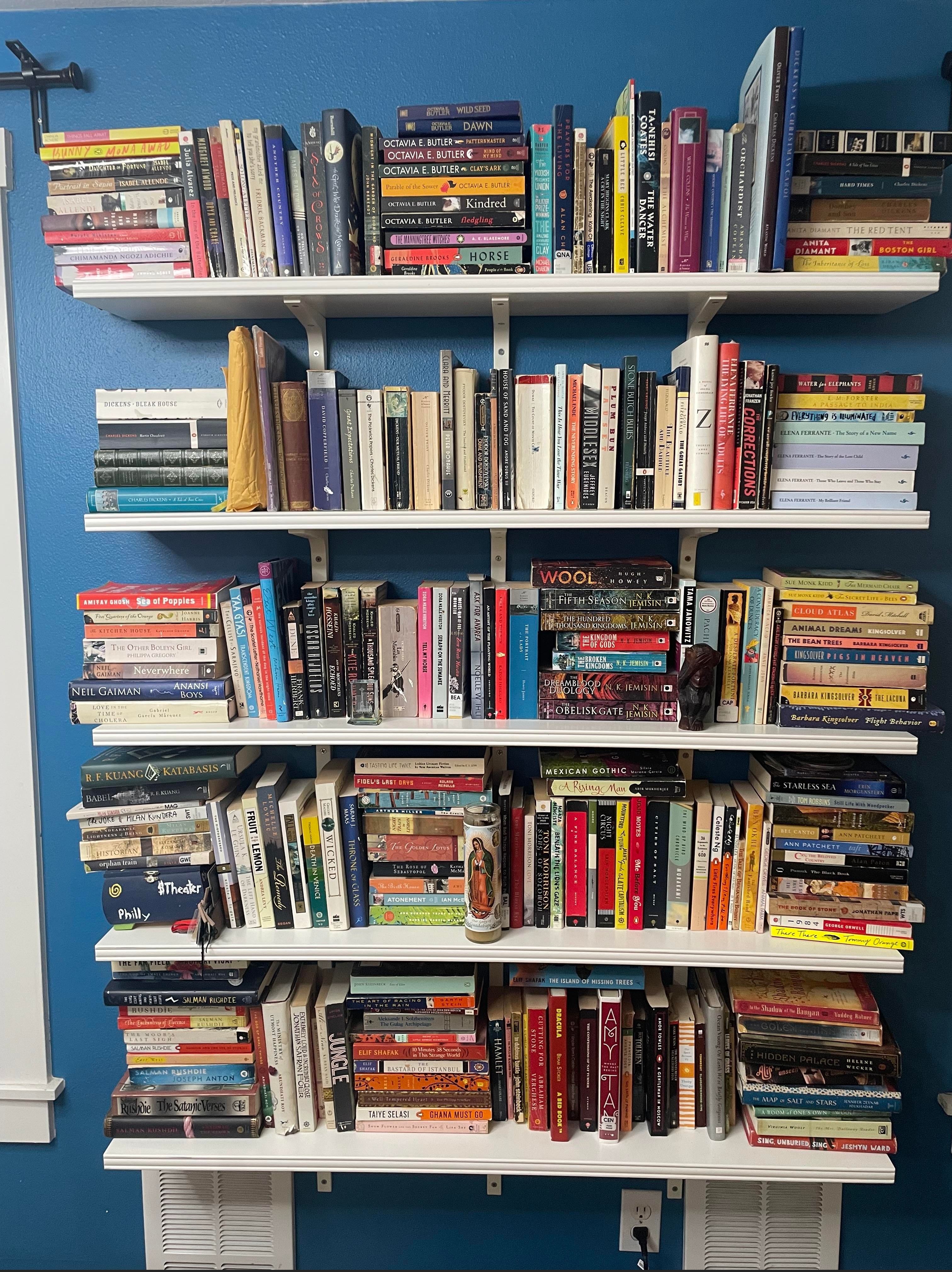
These books are Distant Cousins
These books sit together on 2 different collections in our database