Shelfology Book Pairing
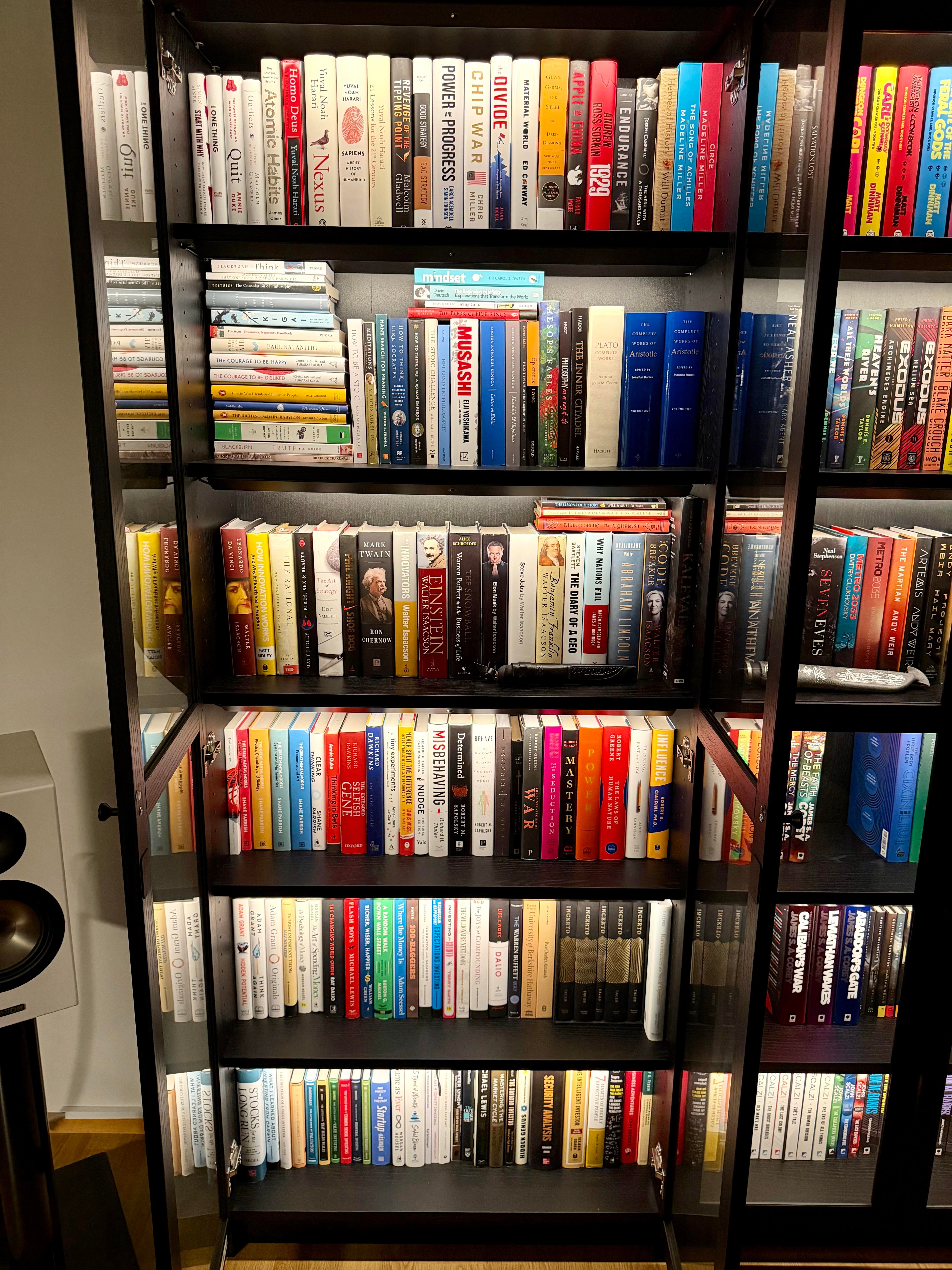
Material World
The Six Raw Materials That Shape Modern Civilization
by Ed Conway
THE NEW YORK TIMES BOOK REVIEW EDITORS' CHOICE • AN ECONOMIST BEST BOOK OF THE YEAR • Finalist for the Financial Times and Schroders Business Book of the Year Award Sand, salt, iron, copper, oil, and lithium. These fundamental materials have created empires, razed civilizations and fed our ingenuity and our greed for thousands of years. Without them, our modern world would not exist, and the battle to control them will determine our future. The fiber-optic cables that weave the World Wide Web, the copper veins of our electric grid, the silicon chips and lithium batteries that power our phones and cars: though it can feel like we now live in a weightless world of information—what Ed Conway calls “the ethereal world”—our twenty-first-century lives are still very much rooted in the material. In fact, we dug more stuff out of the earth in 2017 than in all of human history before 1950. For every ton of fossil fuels, we extract six tons of other materials, from sand to stone to wood tometal. And in Material World, Conway embarks on an epic journey across continents, cultures and epochs to reveal the underpinnings of modern life on Earth—traveling from the sweltering depths ofthe deepest mine in Europe to spotless silicon chip factories in Taiwan to the eerie green pools where lithium originates. Material World is a celebration of the humans and the human networks, the miraculous processes and the little-known companies, that combine to turn raw materials into things of wonder. This is the story of human civilization from an entirely new perspective: the ground up.
Chip War
The Fight for the World's Most Critical Technology
by Chris Miller
"An epic account of the decades-long battle to control what has emerged as the world's most critical resource--microchip technology--with the United States and China increasingly in conflict. You may be surprised to learn that microchips are the new oil--the scarce resource on which the modern world depends. Today, military, economic, and geopolitical power are built on a foundation of computer chips. Virtually everything--from missiles to microwaves, smartphones to the stock market--runs on chips. Until recently, America designed and built the fastest chips and maintained its lead as the #1 superpower. Now, America's edge is slipping, undermined by competitors in Taiwan, Korea, Europe, and, above all, China. Today, as Chip War reveals, China, which spends more money each year importing chips than it spends importing oil, is pouring billions into a chip-building initiative to catch up to the US. At stake is America's military superiority and economic prosperity. Economic historian Chris Miller explains how the semiconductor came to play a critical role in modern life and how the U.S. become dominant in chip design and manufacturing and applied this technology to military systems. America's victory in the Cold War and its global military dominance stems from its ability to harness computing power more effectively than any other power. But here, too, China is catching up, with its chip-building ambitions and military modernization going hand in hand. America has let key components of the chip-building process slip out of its grasp, contributing not only to a worldwide chip shortage but also a new Cold War with a superpower adversary that is desperate to bridge the gap. Illuminating, timely, and fascinating, Chip War shows that, to make sense of the current state of politics, economics, and technology, we must first understand the vital role played by chips"--Amazon.
These books are Distant Cousins
These books sit together on 2 different collections in our database