Shelfology Book Pairing
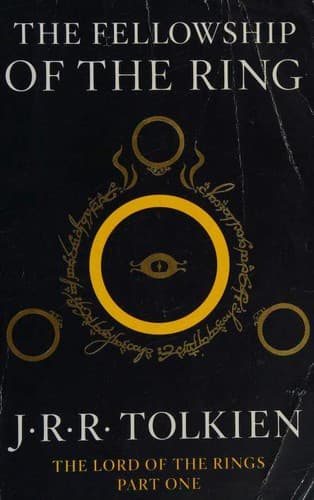
The Fellowship of the Ring
Being the First Part of The Lord of the Rings
by J.R.R. Tolkien
The opening novel of The Lord of the Rings—the greatest fantasy epic of all time—which continues in The Two Towers and The Return of the King. Nominated as one of America’s best-loved novels by PBS’s The Great American Read The dark, fearsome Ringwraiths are searching for a Hobbit. Frodo Baggins knows that they are seeking him and the Ring he bears—the Ring of Power that will enable evil Sauron to destroy all that is good in Middle-earth. Now it is up to Frodo and his faithful servant, Sam, with a small band of companions, to carry the Ring to the one place it can be destroyed: Mount Doom, in the very center of Sauron’s realm.
The Song of the Cell
An Exploration of Medicine and the New Human
by Siddhartha Mukherjee
From Pulitzer Prize-winning and #1 New York Times bestselling author of The Emperor of All Maladies and The Gene, The Song of The Cell is the third book in this extraordinary writer's exploration of what it means to be human-rich with Siddhartha Mukherjee's revelatory and exhilarating stories of scientists, doctors, and all the patients whose lives may be saved by their work. In the late 1600s, a distinguished English polymath, Robert Hooke, and an eccentric Dutch cloth merchant, Antonie van Leeuwenhoek, look down their handmade microscopes. What they see introduces a radical concept that sweeps through biology and medicine, touching virtually every aspect of the two sciences and altering both forever. It is the fact that complex living organisms are assemblages of tiny, self-contained, self-regulating units. Our organs, our physiology, our selves-hearts, blood, brains-are built from these compartments. Hooke christens them 'cells'. The discovery of cells-and the reframing of the human body as a cellular ecosystem-announced the birth of a new kind of medicine based on the therapeutic manipulations of cells. A hip fracture, a cardiac arrest, Alzheimer's, dementia, AIDS, pneumonia, lung cancer, kidney failure, arthritis, COVID-all could be viewed as the results of cells, or systems of cells, functioning abnormally. And all could be perceived as loci of cellular therapies. In The Song of the Cell, Mukherjee tells the story of how scientists discovered cells, began to understand them, and are now using that knowledge to create new humans. He seduces readers with writing so vivid, lucid, and suspenseful that complex science becomes thrilling. Told in six parts, laced with Mukherjee's own experience as a researcher, doctor, and prolific reader, The Song of the Cell is both panoramic and intimate-a masterpiece.
These books are Distant Cousins
These books sit together on 2 different collections in our database