Shelfology Book Pairing
Dune
by Frank Herbert
Frank Herbert’s classic masterpiece—a triumph of the imagination and one of the bestselling science fiction novels of all time. Set on the desert planet Arrakis, Dune is the story of Paul Atreides—who would become known as Muad'Dib—and of a great family's ambition to bring to fruition humankind's most ancient and unattainable dream. A stunning blend of adventure and mysticism, environmentalism and politics, Dune won the first Nebula Award, shared the Hugo Award, and formed the basis of what is undoubtedly the grandest epic in science fiction.
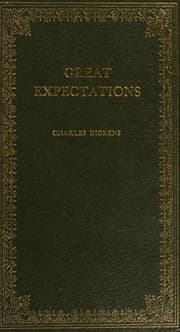
Great Expectations
Charles Dickens
by Charles Dickens
Great Expectations is Charles Dickens's thirteenth novel and his penultimate (completed) novel; a bildungsroman which depicts the personal growth and personal development of an orphan nicknamed Pip. It is Dickens's second novel, after David Copperfield, to be fully narrated in the first person. The novel was first published as a serial in Dickens's weekly periodical All the Year Round, from 1 December 1860 to August 1861. In October 1861, Chapman and Hall published the novel in three volumes. It is set among marshes in Kent, and in London, in the early to mid-1800s, and contains some of Dickens' most memorable scenes, including the opening, in a graveyard, where the young Pip is accosted by the escaped convict, Abel Magwitch. Great Expectations is full of extreme imagery - poverty; prison ships and chains, and fights to the death - and has a colourful cast of characters who have entered popular culture. These include the eccentric Miss Havisham, the cold and beautiful Estella, and Joe, the kind and generous blacksmith. Dickens's themes include wealth and poverty, love and rejection, and the eventual triumph of good over evil. Great Expectations is popular both with readers and literary critics, and has been translated into many languages, and adapted numerous times into various media. Upon its release, Thomas Carlyle spoke disparagingly of "all that Pip's nonsense". Later, George Bernard Shaw praised the novel, as "All of one piece and consistently truthfull." Dickens felt Great Expectations was his best work, calling it "a very fine, new and grotesque idea".