Shelfology Book Pairing
Metamorphoses
by Ovid
"Ovid is, after Homer, the single most important source for classical mythology. The Metamorphoses, which he wrote over the six-year period leading up to his exile from Rome in 8 a.d. , is the primary source for over two hundred classical legends that survived to the twenty-first century. Many of the most familiar classical myths, including the stories of Apollo and Daphne and Pyramus and Thisbe, come directly from Ovid. The Metamorphoses is a twelve-thousand-line poem, written in dactylic hexameters and arranged loosely in chronological order from the beginning of the universe's creation to the Augustan Rome of Ovid's own time. The major theme of the Metamorphoses, as the title suggests, is metamorphosis, or change. Throughout the fifteen books making up the Metamorphoses, the idea of change is pervasive. Gods are continually transforming their own selves and shapes, as well as the shapes and beings of humans. The theme of power is also ever-present in Ovid's work. The gods as depicted by the Roman poets are wrathful, vengeful, capricious creatures who are forever turning their powers against weaker mortals and half-mortals, especially females. Ovid's own situation as a poet who was exiled because of Augustus's capriciousness is thought by many to be reflected in his depictions of the relationships between the gods and humans." -- from http://www.enotes.com/metamorphoses-of-ovid (Jan. 24, 2011.)
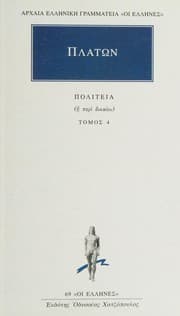
The Republic
Plato
by Plato
Plato's Republic has long defied classification: it is a philosophical masterpiece; it is acute political theory; it is great literature. Although certain inconsistencies have been subsequently discovered, philosophical and otherwise, there can be no doubt that The Republic is a work of genius. It has as its central problem the nature of justice. In a word, what is justice? From this common origin, however, the book divides at a broader level. There is first of all the mundane, represented in the first books by the refutation of proverbial morality and traditional society. But the middle books belong almost exclusively to pure philosophy. In these Plato examines the figure of the philosopher, metaphysics, and epistemology, an extended investigation that culminates in the allegory of the vision, visibility, and the sun as symbol of the good, or justice. It not until the delineation of the famous "Myth of the Cave" in Book VII, however, that the two realms: material and ideal, polity and philosophy, historical State and ideal State, virtue and ethics truly come together. The image of the liberated prisoner forsaking the light, compelled whether by force or obligation?Plato would say duty?to rejoin his companions in the murky darkness of the cave, is perhaps the key to the underlying unity of The Republic. It is in the individual that the two realms meet. Plato's aim, then, was to realize social and political stability on a foundation of moral and spiritual absolutes by which every man may live.
These books are No Strangers
These books sit together on 3 different collections in our database