Shelfology Book Pairing
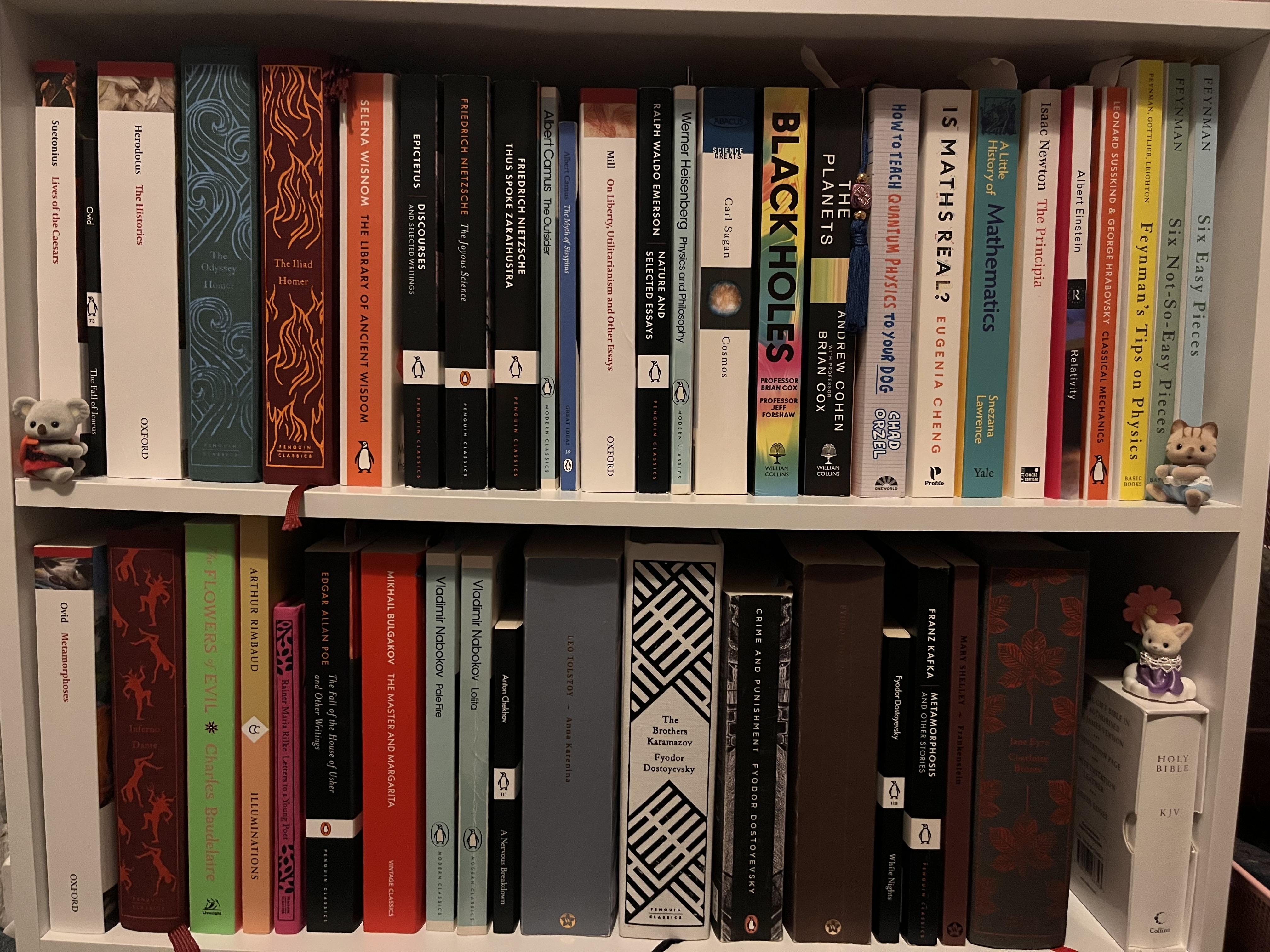
Metamorphoses
by Ovid
"Ovid is, after Homer, the single most important source for classical mythology. The Metamorphoses, which he wrote over the six-year period leading up to his exile from Rome in 8 a.d. , is the primary source for over two hundred classical legends that survived to the twenty-first century. Many of the most familiar classical myths, including the stories of Apollo and Daphne and Pyramus and Thisbe, come directly from Ovid. The Metamorphoses is a twelve-thousand-line poem, written in dactylic hexameters and arranged loosely in chronological order from the beginning of the universe's creation to the Augustan Rome of Ovid's own time. The major theme of the Metamorphoses, as the title suggests, is metamorphosis, or change. Throughout the fifteen books making up the Metamorphoses, the idea of change is pervasive. Gods are continually transforming their own selves and shapes, as well as the shapes and beings of humans. The theme of power is also ever-present in Ovid's work. The gods as depicted by the Roman poets are wrathful, vengeful, capricious creatures who are forever turning their powers against weaker mortals and half-mortals, especially females. Ovid's own situation as a poet who was exiled because of Augustus's capriciousness is thought by many to be reflected in his depictions of the relationships between the gods and humans." -- from http://www.enotes.com/metamorphoses-of-ovid (Jan. 24, 2011.)
Anna Karenina (Illustrated)
by Leo Tolstoy
Anna Karenina (Russian: «Анна Каренина»; Russian pronunciation: ) is a novel by the Russian writer Leo Tolstoy, published in serial installments from 1873 to 1877 in the periodical The Russian Messenger. Tolstoy clashed with editor Mikhail Katkov over political issues that arose in the final installment (Tolstoy's unpopular views of volunteers going to Serbia); therefore, the novel's first complete appearance was in book form in 1878. Widely regarded as a pinnacle in realist fiction, Tolstoy considered Anna Karenina his first true novel, when he came to consider War and Peace to be more than a novel. Fyodor Dostoyevsky declared it to be "flawless as a work of art". His opinion was shared by Vladimir Nabokov, who especially admired "the flawless magic of Tolstoy's style", and by William Faulkner, who described the novel as "the best ever written". The novel is currently enjoying popularity, as demonstrated by a recent poll of 125 contemporary authors by J. Peder Zane, published in 2007 in "The Top Ten" in Time, which declared that Anna Karenina is the "greatest novel ever written"
These books are No Strangers
These books sit together on 3 different collections in our database