Shelfology Book Pairing
On Liberty and Other Essays
by John Stuart Mill
Collected here in a single volume for the first time, On Liberty, Utilitarianism, Considerations on Representative Government, and The Subjection of Women show Mill applying his liberal utilitarian philosophy to a range of issues that remain vital today - issues of the nature of ethics, the scope and limits of individual liberty, the merits of and costs of democratic government, and the place of women in society. In his Introduction John Gray describes these essays as applications of Mill's doctrine of the Art of Life, as set out in A System of Logic. Using the resources of recent revisionist scholarship, he shows Mill's work to be far richer and subtler than traditional interpretations allow.
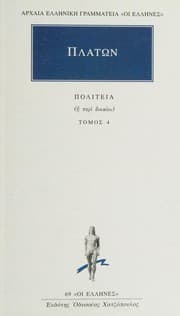
The Republic
Plato
by Plato
Plato's Republic has long defied classification: it is a philosophical masterpiece; it is acute political theory; it is great literature. Although certain inconsistencies have been subsequently discovered, philosophical and otherwise, there can be no doubt that The Republic is a work of genius. It has as its central problem the nature of justice. In a word, what is justice? From this common origin, however, the book divides at a broader level. There is first of all the mundane, represented in the first books by the refutation of proverbial morality and traditional society. But the middle books belong almost exclusively to pure philosophy. In these Plato examines the figure of the philosopher, metaphysics, and epistemology, an extended investigation that culminates in the allegory of the vision, visibility, and the sun as symbol of the good, or justice. It not until the delineation of the famous "Myth of the Cave" in Book VII, however, that the two realms: material and ideal, polity and philosophy, historical State and ideal State, virtue and ethics truly come together. The image of the liberated prisoner forsaking the light, compelled whether by force or obligation?Plato would say duty?to rejoin his companions in the murky darkness of the cave, is perhaps the key to the underlying unity of The Republic. It is in the individual that the two realms meet. Plato's aim, then, was to realize social and political stability on a foundation of moral and spiritual absolutes by which every man may live.
These books are Distant Cousins
These books sit together on 1 different collection in our database