Shelfology Book Pairing
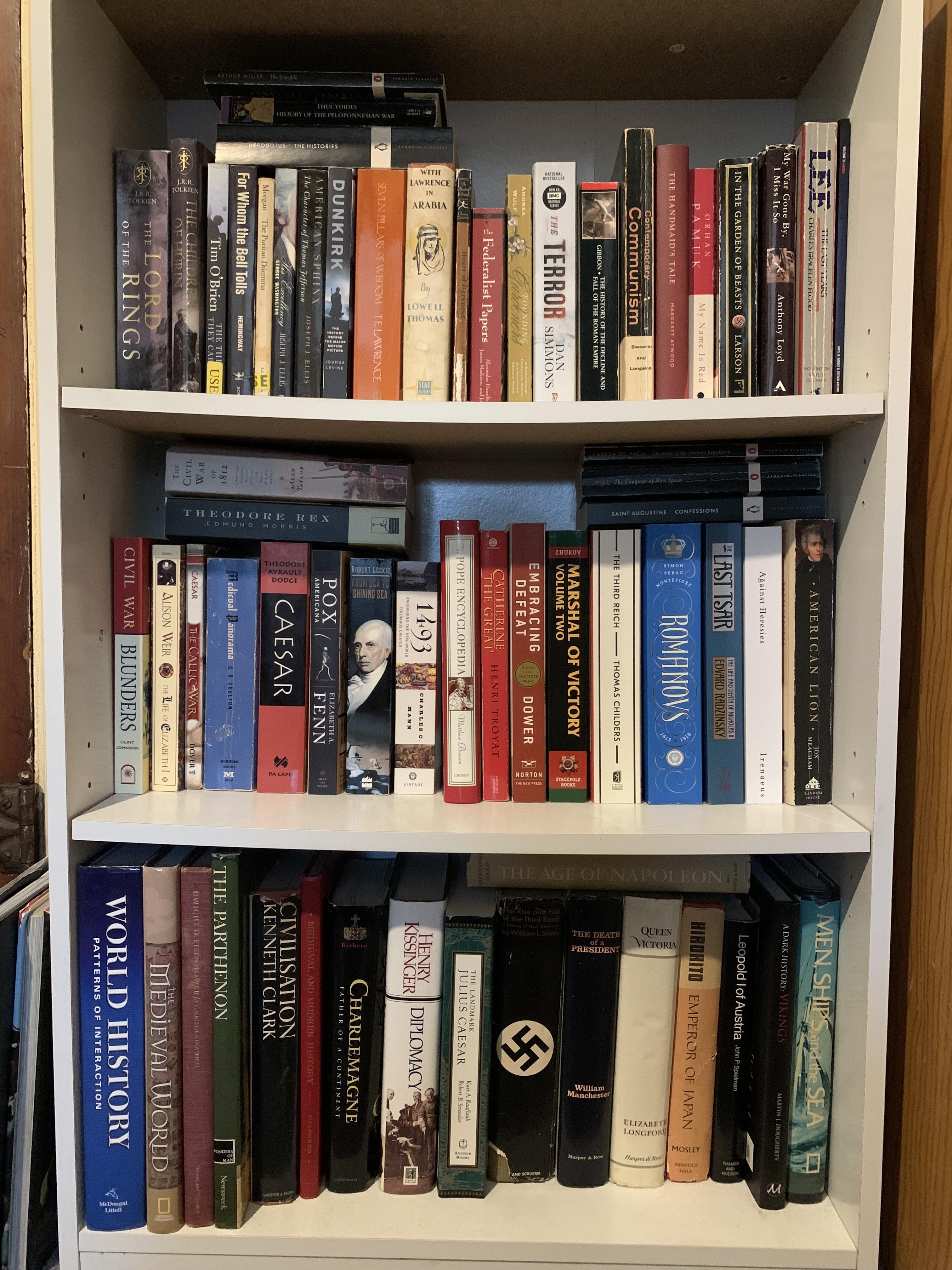
The Crucible
by Arthur Miller
A haunting examination of groupthink and mass hysteria in a rural community A Penguin Classic "I believe that the reader will discover here the essential nature of one of the strangest and most awful chapters in human history," Arthur Miller wrote in an introduction to The Crucible, his classic play about the witch-hunts and trials in seventeenth-century Salem, Massachusetts. Based on historical people and real events, Miller's drama is a searing portrait of a community engulfed by hysteria. In the rigid theocracy of Salem, rumors that women are practicing witchcraft galvanize the town's most basic fears and suspicions; and when a young girl accuses Elizabeth Proctor of being a witch, self-righteous church leaders and townspeople insist that Elizabeth be brought to trial. The ruthlessness of the prosecutors and the eagerness of neighbor to testify against neighbor brilliantly illuminate the destructive power of socially sanctioned violence. Written in 1953, The Crucible is a mirror Miller uses to reflect the anti-communist hysteria inspired by Senator Joseph McCarthy's "witch-hunts" in the United States. Within the text itself, Miller contemplates the parallels, writing: "Political opposition...is given an inhumane overlay, which then justifies the abrogation of all normally applied customs of civilized behavior. A political policy is equated with moral right, and opposition to it with diabolical malevolence." For more than seventy years, Penguin has been the leading publisher of classic literature in the English-speaking world. With more than 1,700 titles, Penguin Classics represents a global bookshelf of the best works throughout history and across genres and disciplines. Readers trust the series to provide authoritative texts enhanced by introductions and notes by distinguished scholars and contemporary authors, as well as up-to-date translations by award-winning translators.
Seven Pillars of Wisdom
A Triumph
by T. E. Lawrence
"Seven Pillars of Wisdom: A Triumph" is a memoir written by T. E. Lawrence, also known as Lawrence of Arabia. The book recounts Lawrence's experiences during the Arab Revolt against the Ottoman Empire during World War I. Lawrence played a key role in organizing and leading Arab forces against the Ottoman Turks in the Arabian Peninsula. The title "Seven Pillars of Wisdom" refers to the seven great cities of the Arab world mentioned in the Book of Proverbs in the Bible. The book is not only a historical account of the events but also a literary work, known for its vivid and poetic prose. Lawrence wrote much of the book while recovering from injuries sustained during the war. The memoir covers Lawrence's personal reflections, the challenges faced during the Arab Revolt, and his interactions with various Arab leaders. Lawrence explores the complexities of Arab politics, tribal dynamics, and the difficulties of achieving a unified Arab front against the Ottoman Empire. The narrative also delves into Lawrence's internal struggles with his identity, loyalty, and the moral implications of war. "Seven Pillars of Wisdom" was initially published privately in 1926 and later in a more widely distributed edition in 1935. Lawrence's work has had a significant impact on the understanding of the Arab Revolt and the geopolitics of the Middle East during and after World War I. The book remains a classic in the genre of military memoirs and has been praised for its literary qualities and its contribution to the understanding of the Arab world.
These books are Distant Cousins
These books sit together on 2 different collections in our database